
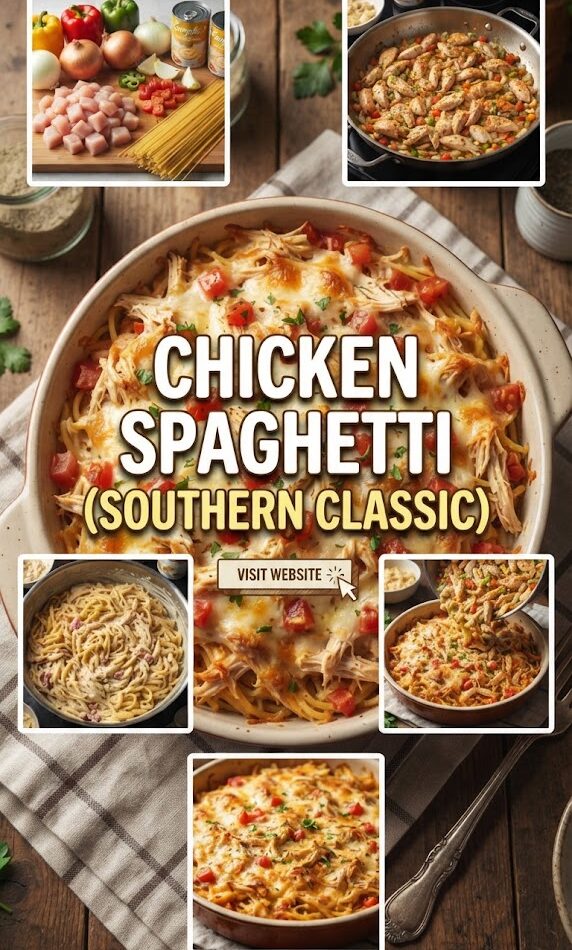
In the pantheon of Southern comfort food, few dishes hold as much sentimental and culinary weight as Chicken Spaghetti. It is a dish that transcends generations, appearing at church potlucks, neighborhood funeral receptions, new-mother visits, and Tuesday night family dinners alike. Unlike the Italian-American spaghetti and meatballs that most people envision when they hear the word “spaghetti,” the Southern version is a creamy, cheesy, baked casserole that feels more like a warm hug than a pasta dish.
This comprehensive guide explores everything there is to know about this legendary dish—from its mid-century origins and the “holy trinity” of its ingredients to the secrets of achieving the perfect golden-brown cheese crust.
The Soul of the South: Why We Love Chicken Spaghetti
What makes Southern Chicken Spaghetti so special? It’s not just the ingredients; it’s the utility and the nostalgia. In the American South, food is a language of love and care. When someone is going through a hard time, you bring them a casserole. When a family gathers for a reunion, the table is lined with 9×13 Pyrex dishes.
Chicken Spaghetti sits at the top of this hierarchy because it is universally liked. It’s mild enough for children, hearty enough for laborers, and easily scalable to feed a crowd. It combines the protein of tender chicken, the satisfaction of pasta, and the indulgence of a rich, velvety cheese sauce, often punctuated by the slight kick of canned tomatoes and green chilies.
The History of a Potluck Legend
The history of Chicken Spaghetti is intertwined with the rise of processed foods in the mid-20th century. While Southerners have been baking pasta and poultry since the 1800s, the modern iteration of this dish gained massive popularity in the 1950s and 60s. This was the era of the “convenience casserole.”
Brands like Campbell’s and Kraft revolutionized the American kitchen by introducing condensed soups and processed cheese products like Velveeta. These ingredients allowed home cooks to create creamy, consistent sauces without the labor-intensive process of making a traditional French béchamel or Mornay sauce. The addition of Ro-Tel (canned tomatoes with green chilies), a Texas staple that eventually spread throughout the South, gave the dish its signature zesty undertone.
Today, while many chefs have updated the recipe with fresh cream and artisanal cheeses, the “classic” version still relies on those pantry staples that remind us of grandma’s kitchen.
The Anatomy of the Perfect Chicken Spaghetti
To understand how to make the best Chicken Spaghetti, we must break it down into its core components. Each element plays a vital role in the final texture and flavor profile.
1. The Chicken
Traditionalists argue that a whole chicken should be poached in water with aromatics (onion, celery, peppercorns) to create a flavorful broth. This broth is then used to boil the spaghetti, infusing the pasta with chicken flavor. However, in the modern fast-paced world, many home cooks opt for a rotisserie chicken. The key is to have tender, bite-sized pieces of meat—a mix of white and dark meat provides the best flavor and moisture.
2. The Pasta
While it is called chicken spaghetti, the choice of noodle matters. Thin spaghetti or standard spaghetti is traditional. The trick is to cook the pasta al dente or even slightly underdone. Since the pasta will continue to cook in the oven while submerged in sauce, overcooking it on the stove results in a mushy casserole—the ultimate sin in Southern cooking.
3. The “Cream” Component
This is where the magic happens. The classic recipe uses a combination of:
- Condensed Cream of Mushroom or Cream of Chicken Soup: Provides a thick, savory base.
- Sour Cream or Heavy Cream: Adds tang and silkiness.
- The Broth: A splash of the chicken cooking liquid thins the sauce just enough to coat every strand of pasta.
4. The Cheese
Velveeta is the “gold standard” for the classic, ultra-creamy texture because it melts without breaking or becoming oily. However, for those who prefer a more sophisticated flavor, a sharp cheddar or a Monterey Jack provides a better “bite.” Many cooks use a blend: Velveeta in the sauce for creaminess and shredded sharp cheddar on top for a toasted crust.
5. The Veggies and Aromatics
Bell peppers (usually green or red), onions, and celery provide a necessary crunch and aromatic base. And of course, the Ro-Tel tomatoes. These canned tomatoes with diced green chilies provide the acidity needed to cut through the heavy fat of the cheese and cream.
The Master Recipe: Classic Southern Chicken Spaghetti
This recipe serves 8-10 people and is designed for a standard 9×13-inch baking dish.
Ingredients
For the Chicken and Pasta:
- 1 whole chicken (approx. 3-4 lbs) or 1 large rotisserie chicken, shredded.
- 1 lb (16 oz) spaghetti noodles.
- 1 tablespoon salt (for the pasta water).
For the Sauce:
- 1 medium yellow onion, finely diced.
- 1 green bell pepper, finely diced.
- 2 cloves garlic, minced.
- 2 tablespoons butter.
- 1 can (10.5 oz) Cream of Mushroom soup.
- 1 can (10.5 oz) Cream of Chicken soup.
- 1 can (10 oz) Ro-Tel Diced Tomatoes and Green Chilies (original or mild).
- 1 lb (16 oz) Velveeta cheese, cubed (or 4 cups shredded sharp cheddar).
- 1/2 cup sour cream.
- 1 teaspoon black pepper.
- 1/2 teaspoon cayenne pepper (optional for heat).
- 1/2 teaspoon seasoned salt (like Lawry’s).
For the Topping:
- 2 cups shredded sharp cheddar cheese.
- Optional: Fresh parsley for garnish.
Step-by-Step Instructions
Step 1: Prepare the Chicken
If using a fresh chicken, place it in a large pot and cover with water. Add a halved onion and some celery stalks for flavor. Bring to a boil, then reduce to a simmer and cook for 45-60 minutes until the meat pulls away from the bone. Remove the chicken, let it cool, and shred the meat into bite-sized pieces. Reserve at least 2 cups of the cooking broth.
Step 2: Cook the Pasta
In the same pot of boiling chicken broth (add more water and salt if necessary), cook the spaghetti. Aim for 2 minutes less than the package directions for al dente. Drain the pasta and set aside.
Step 3: Sauté the Aromatics
In a large skillet or Dutch oven, melt the butter over medium heat. Add the diced onion and bell pepper. Sauté for 5-7 minutes until softened. Add the minced garlic and cook for another 60 seconds until fragrant.
Step 4: Build the Sauce
To the skillet with the vegetables, add the condensed soups, the Ro-Tel (do not drain the liquid!), and the cubed Velveeta or shredded cheese. Stir constantly over low heat until the cheese is completely melted and the sauce is smooth. Stir in the sour cream, black pepper, cayenne, and seasoned salt. If the sauce is too thick, add a splash of the reserved chicken broth until it reaches a velvety consistency.
Step 5: Combine
In a very large mixing bowl (or back in the pasta pot), combine the cooked spaghetti, the shredded chicken, and the cheese sauce. Toss thoroughly until every strand of pasta is coated. If it looks “too wet,” don’t worry—the pasta will absorb the moisture in the oven.
Step 6: Bake
Preheat your oven to 350°F (175°C). Lightly grease a 9×13-inch baking dish. Pour the mixture into the dish and spread it evenly. Top with the 2 cups of shredded cheddar cheese. Bake for 30-35 minutes, or until the sauce is bubbling around the edges and the cheese on top is melted and beginning to turn golden brown.
Step 7: Rest and Serve
Allow the casserole to rest for 10 minutes before serving. This is a crucial step! It allows the sauce to set so it doesn’t run all over the plate. Garnish with fresh parsley if desired.
Pro-Tips for Culinary Success
While the recipe is straightforward, there are several “pro-secrets” that elevate a good chicken spaghetti to a legendary one.
1. The Broth Secret
Never boil your pasta in plain water if you have chicken broth available. The starch in the pasta absorbs the liquid it’s cooked in. By using the chicken poaching liquid, you ensure that even the core of the noodle tastes like savory chicken.
2. Don’t Drain the Ro-Tel
The liquid inside the can of Ro-Tel is packed with the flavor of the chilies and the acidity of the tomatoes. This liquid helps thin the heavy cheese sauce and adds a brightness that prevents the dish from feeling too “heavy.”
3. Seasoning the Chicken
If you are using rotisserie chicken, it is already seasoned. However, if you are poaching your own, ensure you season the water heavily. A bland chicken will result in a bland casserole, regardless of how much cheese you add.
4. The “Golden Crust”
If you like a crispy topping, turn on the broiler for the last 2-3 minutes of baking. Watch it closely! The sugars in the cheese will caramelize and create a delicious, slightly crunchy texture that contrasts beautifully with the creamy interior.
Regional Variations and Modern Twists
Like any folk recipe, Chicken Spaghetti has adapted to different regions and dietary preferences.
The Texas Variation
Texas Chicken Spaghetti often leans into the “Southwest” influence. This version might include more cumin, extra jalapeños, and perhaps some black beans or corn mixed in. It’s often served with a side of cornbread rather than the traditional garlic bread.
The “From Scratch” Gourmet Version
For those who avoid processed foods, you can make a “clean” version. Replace the condensed soups with a homemade velouté (chicken stock thickened with a butter-flour roux) and a bit of heavy cream. Replace the Velveeta with a high-quality melting cheese like Fontina or Gruyère mixed with sharp White Cheddar.
The Spicy Kick
For a truly spicy version, use “Hot” Ro-Tel and add a chopped chipotle pepper in adobo sauce to the cheese mixture. This creates a smoky, fiery flavor profile that is popular in Mississippi and Louisiana.
The Low-Carb/Keto Swap
While the spaghetti is the namesake, those on low-carb diets often swap the pasta for roasted spaghetti squash or “zoodles” (zucchini noodles). While the texture changes, the creamy chicken and cheese sauce still deliver that signature comfort food flavor.
What to Serve with Southern Chicken Spaghetti
Because this dish is so rich and hearty, it needs sides that provide contrast—either through acidity, crunch, or freshness.
- Garlic Bread or Cheesy Biscuits: To soak up any extra sauce.
- A Crisp Green Salad: A simple vinaigrette-dressed salad with cucumbers and radishes cuts through the richness of the cheese.
- Green Beans or Collard Greens: The slight bitterness of Southern-style greens or the snap of steamed green beans provides a balanced meal.
- Roasted Broccoli: The charred florets pair excellently with cheese sauce.
- Iced Tea: In the South, a tall glass of sweet tea (or “table wine of the South”) is the mandatory beverage accompaniment.
Make-Ahead, Freezing, and Leftover Tips
One of the reasons Chicken Spaghetti is a staple for busy families is its ability to be prepared in advance.
Make-Ahead Instructions
You can assemble the entire casserole (up to the point of baking) a day in advance. Cover it tightly with plastic wrap and store it in the refrigerator. When you’re ready to eat, take it out of the fridge 30 minutes before baking to take the chill off, then bake as directed (you may need an extra 10 minutes of oven time).
Freezing Guide
Chicken Spaghetti freezes beautifully.
- To Freeze: Assemble the casserole in a freezer-safe foil pan. Do not bake it. Cover tightly with a layer of plastic wrap and then a layer of heavy-duty aluminum foil. It will stay fresh for up to 3 months.
- To Reheat from Frozen: It is best to thaw the casserole in the refrigerator overnight before baking. If you must bake from frozen, cover with foil and bake at 350°F for about 1 hour, then remove the foil and bake for another 20-30 minutes until the center is hot.
The Beauty of Leftovers
Many people swear that Chicken Spaghetti tastes even better the next day. As it sits in the fridge, the pasta continues to absorb the flavors of the sauce. To reheat a single portion, add a tiny splash of milk or water before microwaving to ensure the sauce stays creamy and doesn’t get oily.
Common Mistakes to Avoid
- Overcooking the Pasta: We cannot stress this enough. Mushy noodles are the primary way to ruin this dish.
- Not Enough Sauce: The pasta will absorb a lot of liquid. If the mixture looks “just right” before it goes in the oven, it will likely be too dry when it comes out. It should look slightly too saucy before baking.
- Using Fat-Free Ingredients: This is not the dish for “light” versions. Fat-free cheese doesn’t melt well, and fat-free sour cream can curdle. Stick to the full-fat versions for the intended experience.
- Skipping the Aromatics: Don’t just mix chicken, pasta, and soup. The sautéed onions and peppers provide the foundational flavor that makes this a “meal” rather than just a snack.
Frequently Asked Questions (FAQs)
Can I use different types of pasta?
Yes! While spaghetti is traditional, noodles like fettuccine, linguine, or even penne work well. The goal is to have a noodle that can be easily coated in the thick sauce.
Is Chicken Spaghetti the same as Tetrazzini?
They are cousins, but not twins. Chicken Tetrazzini typically uses a more traditional white sauce (often with sherry), mushrooms, and peas, and is usually topped with Parmesan and breadcrumbs. Southern Chicken Spaghetti is defined by the use of cheddar/Velveeta and the inclusion of Ro-Tel tomatoes for a zesty flavor.
How do I prevent the cheese sauce from breaking?
If you are using real cheddar instead of Velveeta, avoid boiling the sauce once the cheese is added. High heat can cause the proteins in the cheese to clump and the fats to separate. Melt the cheese over low, gentle heat.
Can I use turkey instead of chicken?
Absolutely. This is a very popular way to use up leftover Thanksgiving turkey. The flavor profile is very similar, and the creamy sauce keeps the turkey breast meat from tasting dry.
What if I can’t find Ro-Tel?
If you live in an area where Ro-Tel isn’t available, you can substitute a can of diced tomatoes and a small can of diced green chilies. Add a pinch of red pepper flakes if you want more heat.
Why This Dish Remains a Cultural Icon
In an era of “deconstructed” meals and “clean eating,” the Southern Chicken Spaghetti casserole remains stubbornly unchanged. It represents a specific type of American hospitality. It’s the dish brought to the door of a neighbor who just lost a job. It’s the meal that kids request for their birthday dinners.
It represents the blending of cultures—the Italian influence of pasta, the Mexican-Texan influence of chilies and tomatoes, and the Southern obsession with slow-cooked poultry and communal eating. It is a testament to the idea that sometimes, the simplest, most “processed” ingredients can come together to create something that is much more than the sum of its parts.
Whether you are a seasoned Southern cook or someone looking to try this classic for the first time, the key is to cook with heart. Don’t be afraid of the cheese, don’t skimp on the seasonings, and always make enough to share with someone else.
Conclusion
Southern Chicken Spaghetti is more than a recipe; it’s a tradition. It defies the trends of the culinary world by focusing on what truly matters: flavor, comfort, and the ability to bring people together around a table. By following this guide, you aren’t just making a dinner; you’re creating an experience that has been cherished in American homes for over half a century.
So, gather your ingredients, put on your favorite apron, and prepare to serve a dish that will have everyone asking for seconds—and the recipe. From the first bite of creamy, cheesy pasta to the last bit of golden-brown crust, you’ll understand why this Southern classic will never go out of style.