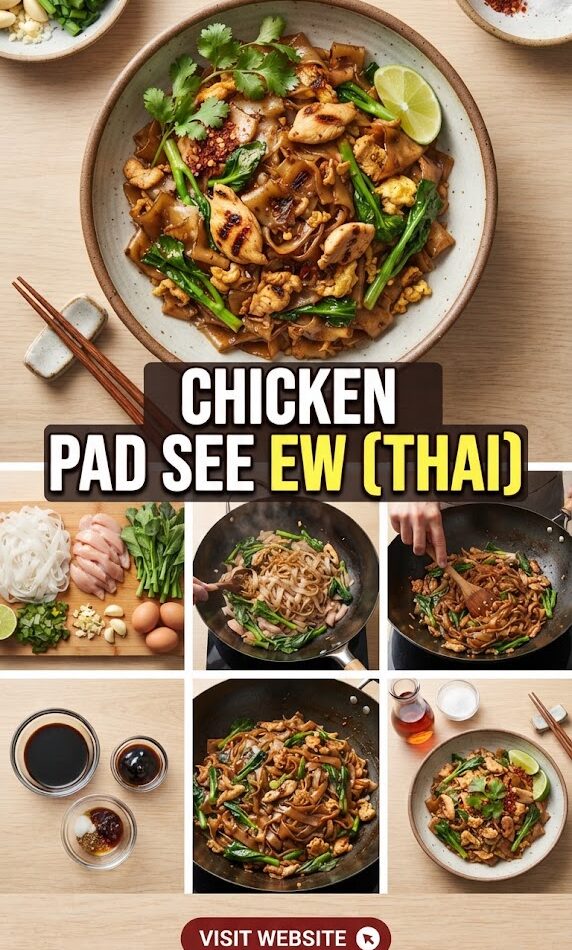
If you have ever wandered through the bustling night markets of Bangkok or sat at a cramped table in a high-end Thai bistro in downtown Manhattan, you have likely encountered the intoxicating aroma of caramelizing soy sauce and searing heat. This is the scent of Pad See Ew, the undisputed comfort food king of Thai cuisine.
Unlike its globally famous cousin, Pad Thai, which leans into a complex profile of sweet, sour, and nutty flavors, Chicken Pad See Ew is all about the “breath of the wok” (Wok Hei), the deep umami of dark soy sauce, and the satisfying chew of wide, charred rice noodles. In this comprehensive guide, we will dive into the history, the science of the ingredients, and the professional techniques required to recreate this restaurant-quality masterpiece in your own kitchen.
What Exactly is Chicken Pad See Ew?
The name “Pad See Ew” (sometimes spelled Phat Si-io) literally translates to “fried with soy sauce.” It is a Chinese-influenced Thai stir-fry dish that emerged from the Teochew people who migrated to Thailand.
The dish consists of three core components:
- Sen Yai: Extra-wide, flat rice noodles.
- Gai Lan: Chinese broccoli, which provides a bitter, crunchy contrast to the soft noodles.
- The Sauce: A blend of light and dark soy sauces that provides a rich, mahogany color and a savory-sweet finish.
While Pad Thai is often considered the “national dish” for tourists, Pad See Ew is what locals frequently crave for a quick, filling lunch. It is savory, slightly smoky, and immensely satisfying.
Pad See Ew vs. Pad Thai vs. Pad Kee Mao: Understanding the Difference
For the uninitiated, Thai noodle dishes can seem similar. However, understanding their differences is key to mastering the cuisine.
Pad See Ew
- Flavor Profile: Salty, savory, and subtly sweet. No spice unless added at the table.
- Key Ingredient: Dark soy sauce and Chinese broccoli.
- Noodle Type: Wide, flat rice noodles.
- Vibe: Ultimate comfort food; mild and kid-friendly.
Pad Thai
- Flavor Profile: Sweet, sour, and salty (tamarind-based).
- Key Ingredient: Tamarind paste, palm sugar, peanuts, and bean sprouts.
- Noodle Type: Thin, chewy rice sticks.
- Vibe: Bright, zesty, and complex.
Pad Kee Mao (Drunken Noodles)
- Flavor Profile: Spicy, herbal, and savory.
- Key Ingredient: Thai bird’s eye chilies and Holy Basil.
- Noodle Type: Wide, flat rice noodles (same as Pad See Ew).
- Vibe: Bold, fiery, and aromatic.
The Essential Ingredients: A Deep Dive
To achieve the authentic “street food” taste, you cannot simply substitute ingredients haphazardly. Each element plays a specific role in the chemistry of the dish.
1. The Noodles (Sen Yai)
The hallmark of a great Pad See Ew is the noodles. Ideally, you want fresh wide rice noodles. They are usually sold in Asian grocery stores in large vacuum-sealed blocks or pre-cut strips coated in oil.
- Handling Fresh Noodles: If they are cold and hard, microwave them for 30–60 seconds until pliable. Do not boil them, or they will turn to mush in the wok.
- Dried Substitutes: If you cannot find fresh, use the widest dried rice sticks available. Soak them in lukewarm water until “al dente” before stir-frying.
2. The Protein: Chicken
While Pad See Ew can be made with beef or pork, chicken is the most popular choice in the US.
- Pro Tip (Velveting): To get that tender, silky texture found in restaurants, thinly slice the chicken breast or thigh against the grain and marinate it for 15 minutes in a teaspoon of cornstarch and a splash of soy sauce.
3. Chinese Broccoli (Gai Lan)
Do not confuse this with regular Western broccoli. Gai Lan has long, thick stems, large flat leaves, and a slightly bitter edge that cuts through the richness of the soy sauce.
- Prep: Peel the tough outer skin of the thick stems and slice them on a diagonal so they cook at the same rate as the leaves.
4. The “Holy Trinity” of Soy Sauces
You need three specific liquids to get the flavor right:
- Light Soy Sauce: For saltiness and depth.
- Dark Soy Sauce (Thai Black Soy Sauce): This is thicker and sweeter. Its primary job is to provide that deep, dark caramel color and a molasses-like sweetness.
- Oyster Sauce: For umami and a glossy sheen.
5. Aromatics and Fat
- Garlic: Plenty of it. Use fresh cloves, finely minced.
- Eggs: These add richness and act as a binder.
- High Smoke Point Oil: Use canola, peanut, or vegetable oil. Avoid olive oil, as it cannot handle the high heat required for a proper stir-fry.
The Secret to the Perfect Sauce
The sauce is the soul of the dish. A balanced Pad See Ew sauce should be predominantly savory with a lingering sweetness that doesn’t overwhelm the palate.
The Golden Ratio (for 2 servings):
- 2 tbsp Oyster Sauce
- 1 tbsp Light Soy Sauce
- 2 tsp Dark Soy Sauce (adjust for color)
- 2 tsp Sugar (preferably palm sugar or brown sugar)
- 1 tsp White Vinegar (this provides a necessary “lift” to the heavy flavors)
Equipment: Why the Wok Matters
If you want to achieve Wok Hei (the “breath of the wok”), a carbon steel wok is your best friend. The shape of the wok allows for intense heat concentration at the bottom and cooler zones on the sides.
However, if you are cooking on a standard American electric or induction stove, a large, heavy-bottomed cast-iron skillet is a great alternative. The goal is heat retention. You want the noodles to sear and caramelize, not steam.
Step-by-Step Instructions: The Master Recipe
Ingredients List
- 1 lb Fresh wide rice noodles (separated)
- 1/2 lb Chicken breast or thigh (thinly sliced)
- 2 cups Chinese broccoli (stems sliced, leaves chopped)
- 3 cloves Garlic (minced)
- 2 large Eggs
- 3 tbsp Neutral oil (divided)
- Sauce Mixture: (As detailed above)
- Optional: White pepper and Thai chili flakes for serving.
Phase 1: Preparation (Mise en Place)
Stir-frying happens in a matter of minutes. You will not have time to chop while the stove is on.
- Separate your noodles so they aren’t stuck together.
- Whisk your sauce ingredients in a small bowl.
- Have your chicken, garlic, and broccoli ready in separate bowls.
Phase 2: Searing the Protein
- Heat 1 tablespoon of oil in the wok over high heat until it just begins to smoke.
- Add the chicken in a single layer. Let it sear undisturbed for 60 seconds to get a golden crust.
- Toss until nearly cooked through, then remove the chicken from the wok and set aside. (This prevents the chicken from becoming rubbery).
Phase 3: The Aromatics and Eggs
- Add another tablespoon of oil if the wok is dry. Add the garlic and the thick stems of the Chinese broccoli. Stir-fry for 45 seconds.
- Push the vegetables to the side. Crack the eggs into the center. Scramble them slightly and let them set for 30 seconds before breaking them into large chunks.
Phase 4: The Char (The Most Important Part)
- Add the noodles and the chicken back into the wok.
- Immediately pour the sauce mixture over the noodles.
- The Technique: Using a wide spatula, gently fold the noodles to coat them in the sauce. Then, spread the noodles out against the hot surface of the wok.
- Do not touch them for 30–45 seconds. You want the sugar in the sauce to caramelize and the noodles to develop charred, “burnt” edges.
- Add the broccoli leaves and toss everything together for another minute until the leaves are wilted and the noodles are perfectly coated and glossy.
Phase 5: Finishing Touches
- Turn off the heat. Sprinkle a generous pinch of white pepper over the top.
- Serve immediately. Pad See Ew is best eaten scorching hot.
Mastering “Wok Hei” at Home
One of the biggest complaints home cooks have is that their Pad See Ew tastes “flat” compared to restaurant versions. The difference is the temperature. Restaurants use high-BTU gas burners that create a localized inferno.
How to mimic this at home:
- Small Batches: Never cook more than two servings at a time. If you overcrowd the pan, the temperature drops, the noodles release moisture, and you end up with “boiled” noodles rather than “fried” ones.
- The “Wait” Method: After adding the sauce and noodles, leave them alone. The temptation to stir constantly is the enemy of the char.
- Dry Your Ingredients: Ensure your Chinese broccoli is spun dry after washing. Excess water is the enemy of a good sear.
Customizing Your Pad See Ew
While chicken is the standard, this recipe is highly versatile.
Protein Variations
- Beef: Use flank steak or sirloin. Marinate with a bit of baking soda (1/4 tsp per half pound) to tenderize the fibers.
- Shrimp: Add them at the very end as they cook quickly.
- Tofu/Vegan: Use extra-firm tofu pressed to remove water. Replace oyster sauce with vegetarian mushroom sauce and omit the eggs.
Vegetable Substitutes
If you cannot find Gai Lan, use:
- Broccolini: Very similar flavor, thinner stalks.
- Baby Bok Choy: Provides a great crunch, though it is juicier/waterier.
- Kale: If you want a superfood twist (though not traditional).
Common Mistakes and How to Avoid Them
1. Mushy Noodles
This usually happens from over-soaking dried noodles or using too much liquid in the sauce. If using fresh noodles, ensure they are at room temperature before they hit the wok. Cold noodles break easily.
2. Lack of Color
If your noodles look pale, you haven’t added enough Dark Soy Sauce. This ingredient is less about salt and more about the deep, molasses-like pigment.
3. Too Salty
Soy sauces vary in sodium content. Always start with the recommended amount and taste. If it’s too salty, a squeeze of lime juice or an extra teaspoon of sugar can help balance it.
4. Noodles Sticking to the Wok
This happens if the wok isn’t hot enough or if you aren’t using enough oil. Carbon steel woks need to be “long yau” (heated until smoking, then coated with oil) to become non-stick.
How to Serve Pad See Ew Like a Local
In Thailand, Pad See Ew is rarely served alone. On every table, you will find a “condiment caddy” (Kruang Prung). To eat like a local, provide these four additions:
- Prik Nam Som: Sliced Thai chilies in white vinegar. This is the most important condiment for Pad See Ew as the acid cuts through the oil.
- Dried Chili Flakes (Prik Bon): For those who want heat.
- Sugar: For those who want it even sweeter.
- Fish Sauce (Nam Pla): For an extra punch of salt and umami.
Nutritional Breakdown
Chicken Pad See Ew is a balanced meal containing carbohydrates, protein, and fats. However, because it is a stir-fry, it can be high in sodium and calories depending on the amount of oil and sauce used.
- Calories: Approximately 500–700 per serving.
- Protein: High (from chicken and eggs).
- Carbohydrates: High (from rice noodles).
- Vitamins: Rich in Vitamin K and Vitamin A from the Chinese broccoli.
To make it healthier:
- Increase the ratio of Gai Lan to noodles.
- Use skinless chicken breast.
- Reduce the sugar or use a natural sweetener like stevia (though the caramelization will differ).
Storage and Reheating Tips
Pad See Ew is notoriously difficult to reheat because rice noodles tend to harden and become brittle when cold.
- Storage: Keep in an airtight container in the fridge for up to 3 days.
- Reheating (The Best Way): Re-fry the leftovers in a pan with a tiny splash of water and oil. This helps the noodles regain their chewiness.
- Microwaving: If you must use a microwave, cover the dish with a damp paper towel to create steam and prevent the noodles from drying out.
The Cultural Significance of Pad See Ew
Beyond the ingredients, Pad See Ew represents the beautiful fusion of Chinese and Thai cultures. It showcases the Thai ability to take foreign culinary techniques—like wok-frying and soy sauce fermentation—and adapt them to local palates. It is a dish that bridges the gap between a snack and a feast, making it one of the most beloved exports of Southeast Asia.
By following this guide, you aren’t just making a meal; you are practicing an art form that relies on timing, temperature, and the quality of ingredients. Whether you are a seasoned home chef or a beginner looking to expand your repertoire, mastering Chicken Pad See Ew is a rewarding journey that brings the vibrant energy of a Thai kitchen right to your dining table.
Final Pro-Tips for Success
- Don’t Rush the Prep: The cooking takes 5 minutes. The prep takes 20. Do the work upfront.
- Smell the Sauce: When the dark soy sauce hits the hot wok, it should smell like toasted marshmallows and savory roasted meat. If you don’t smell that “toastiness,” turn up your heat.
- Confidence is Key: Stir-frying requires bold movements. Don’t be afraid of the high flame; embrace it!
Enjoy your journey into the world of authentic Thai street food. With these tips and techniques, your Chicken Pad See Ew will undoubtedly become a requested favorite in your household.