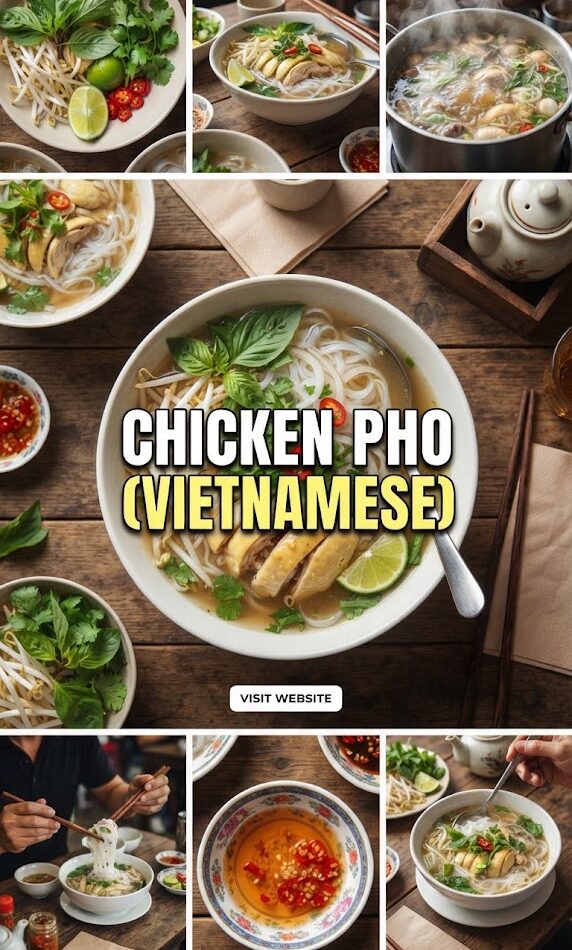
In the pantheon of global comfort foods, few dishes command as much reverence, nostalgia, and pure sensory delight as Vietnamese Pho. While its beefy sibling, Pho Bo, often grabs the international headlines with its rich, muscular broth, Chicken Pho (Pho Ga) is the sophisticated, elegant cousin that captures the heart through subtlety and restorative warmth.
To the uninitiated, Pho Ga might look like a simple chicken noodle soup. To the connoisseur, it is a complex architectural feat of culinary balance. It is a dish where the clarity of the broth, the “snap” of the rice noodles, the fragrance of charred aromatics, and the succulent texture of the poultry converge into a singular, life-affirming experience.
In this comprehensive guide, we will dive deep into the history, the science, the technique, and the cultural ritual of Chicken Pho. Whether you are a home cook looking to master the 10-hour simmer or a food enthusiast wanting to understand the nuances of the Vietnamese kitchen, this is the definitive exploration of Pho Ga.
The Historical Evolution: From Street Stalls to Global Tables
The origins of Pho are shrouded in the misty history of early 20th-century Northern Vietnam, specifically in and around the province of Nam Dinh and the city of Hanoi. While the dish’s roots are undeniably Vietnamese, it is a product of cultural synthesis, reflecting the influences of Chinese trade and French colonial presence.
The Birth of Pho
The prevailing theory suggests that Pho evolved from a combination of Chinese water buffalo soup and the French “Pot-au-feu” (stew). The name “Pho” itself is believed by many linguists to be a Vietnamese adaptation of the French word “feu” (fire). Initially, Pho was exclusively made with beef. However, a pivotal shift occurred in 1939.
The Rise of Pho Ga
During the late 1930s, the colonial government in Vietnam regulated the slaughter of cattle to preserve them for labor and meat for the elite. Consequently, beef became scarce in the markets on Mondays and Fridays. Savvy street vendors, unwilling to lose their livelihood, turned to chicken.
What began as a substitute quickly became a sensation. Pho Ga offered a lighter, cleaner profile that resonated with the Vietnamese palate’s love for fresh, vibrant flavors. By the time the country was partitioned in 1954, Northern refugees fleeing to the South brought their Pho traditions with them, adding sugar, bean sprouts, and a mountain of herbs to suit the tropical climate and sweeter preferences of the Mekong Delta.
The Anatomy of the Perfect Bowl
A bowl of Pho Ga is comprised of four pillars. If one pillar fails, the entire structure collapses.
- The Broth (Nuoc Dung): The soul of the dish. It must be crystal clear, rich with “chicken gold” (fat), and infused with the deep warmth of charred ginger and onions.
- The Noodle (Banh Pho): Flat rice noodles that must be slippery and soft yet possess enough “bite” to hold up against the hot liquid.
- The Meat (Thit Ga): Traditionally, this involves a whole chicken, including the skin and dark meat, which provides more flavor than the lean breast.
- The Aromatics and Garnishes: The finishing touches—fresh herbs, lime, chili, and sauces—that allow each diner to customize the bowl to their specific taste profile.
The Secret is in the Simmer: Deconstructing the Broth
In the world of Pho, the broth is everything. A great Pho Ga broth is not merely a “chicken stock”; it is an infusion. Unlike Western stocks that emphasize celery and carrots, Pho Ga relies on the trinity of charred aromatics, dry spices, and poultry purity.
The Importance of Clarity
A hallmarks of a professional Pho Ga is a broth so clear you can see the noodles at the bottom of the bowl. Achieving this requires a technique called “parboiling.” The chicken and bones are boiled vigorously for 10 minutes, then the water is discarded, and the bones are scrubbed clean of “impurities” (clotted blood and proteins). Only then does the real simmering begin.
Charring: The Maillard Magic
The deep, smoky undertones of Pho come from charring the ginger and onions (or shallots). By placing these aromatics directly over a gas flame or under a broiler until the skins are blackened and the insides are soft, you unlock a caramelized sweetness and a smoky depth that cannot be replicated by simply sautéing.
The Spice Profile
While Pho Bo uses a heavy hand of star anise and cinnamon, Pho Ga requires a lighter touch to avoid overpowering the delicate chicken. The essential spices include:
- Star Anise: Provides a faint licorice note.
- Coriander Seeds: Adds a citrusy, floral brightness.
- Cloves: Offers a pungent, warming depth.
- Ginger: The backbone of the broth’s heat.
Selecting the Perfect Poultry: The “Ga Di Bo” Advantage
In Vietnam, the quality of the chicken is paramount. The preferred bird is known as Ga Di Bo (literally “the chicken that walks”). These are free-range, heritage-breed chickens that are leaner and tougher than the mass-produced broilers found in Western supermarkets, but they possess an incredible depth of flavor and a yellow, fatty skin that turns gelatinous when poached correctly.
In the United States, look for “Yellow Feather” chickens or organic, pasture-raised birds. These chickens produce the signature golden fat (mo ga) that sits atop the broth, acting as a thermal blanket to keep the soup hot and a flavor carrier for the spices.
The Art of the Rice Noodle: Texture and Preparation
The noodles used in Pho are known as Banh Pho. They are made from rice flour and water, resulting in a gluten-free noodle that absorbs the flavor of the broth.
Fresh vs. Dried
- Fresh Banh Pho: Found in the refrigerated section of Asian markets. They require only a 10-second blanch in boiling water. They are superior in texture—silky, soft, and slightly elastic.
- Dried Banh Pho: More common for home cooks. These must be soaked in lukewarm water for 30 minutes before being boiled briefly. The key is to avoid overcooking them; they should have a slight resistance to the tooth.
The Definitive Authentic Pho Ga Recipe
This recipe is designed to yield a restaurant-quality broth that serves 4 to 6 people. It respects the traditional long-simmering process while providing tips for the modern home kitchen.
Ingredients
For the Broth:
- 1 whole free-range chicken (approx. 3-4 lbs)
- 2 lbs chicken backs or necks (for extra body)
- 4 inches of fresh ginger, halved lengthwise
- 2 large yellow onions, peeled and halved
- 4-5 star anise pods
- 1 tablespoon coriander seeds
- 3-4 cloves
- 1 small stick of cinnamon (optional, use sparingly)
- 1 tablespoon salt
- 2 tablespoons fish sauce (Nuoc Mam) – use a high-quality brand like Red Boat
- 1 tablespoon rock sugar (or granulated sugar)
- 6 quarts water
For the Bowls:
- 1 lb Banh Pho (fresh or dried)
- The cooked chicken meat, shredded or sliced
- 1 small white onion, sliced paper-thin
- 3 scallions, thinly sliced
- 1 bunch of cilantro, chopped
The Side Plate (Essential):
- Fresh bean sprouts
- Thai basil (Hung Que)
- Culantro (Ngo Gai) – often called “sawtooth herb”
- Fresh lime wedges
- Birds eye chilies, sliced
- Sriracha and Hoisin sauce
Step-by-Step Instructions
1. The Cleanse (Parboiling)
Place the whole chicken and the extra bones in a large stockpot. Cover with cold water and bring to a rolling boil. Let it boil for 5-10 minutes until a grey foam rises to the top. Drain the water, rinse the chicken under cold running water, and scrub the pot clean. This is the secret to a crystal-clear broth.
2. Charring the Aromatics
While the chicken is being cleansed, place the halved ginger and onions over an open gas flame or under a broiler. Turn them occasionally until the edges are charred black and the centers are fragrant and softened. Use a knife to scrape off any excessively burnt skin, then rinse briefly.
3. Toasting the Spices
In a small dry skillet over medium heat, toast the star anise, coriander seeds, cloves, and cinnamon for 2-3 minutes until they release their oils and smell highly aromatic. Place them in a spice bag or a piece of cheesecloth.
4. The Long Simmer
Return the cleaned chicken and bones to the pot. Add 6 quarts of fresh water. Add the charred ginger, onions, spice bag, salt, and rock sugar. Bring to a gentle simmer (never a hard boil, as this emulsifies the fat and makes the broth cloudy).
- Crucial Step: After about 45-60 minutes, the whole chicken should be cooked through. Remove it carefully and submerge it in a bowl of ice water for 10 minutes. This prevents the skin from drying out and keeps the meat succulent.
- The Continued Simmer: Once the chicken is removed, continue simmering the remaining bones and aromatics for another 2 to 3 hours to extract every bit of collagen and flavor.
5. Prepping the Chicken
Once the chicken has cooled, remove the meat from the bones. Shred the meat into bite-sized pieces. Save the bones and return them to the stockpot for the remainder of the simmering time.
6. Finishing the Broth
After the simmer is complete, strain the broth through a fine-mesh sieve (or a cheesecloth-lined colander) into a clean pot. Discard the solids. Taste the broth. This is when you add the fish sauce. Start with 2 tablespoons and adjust. The broth should be slightly saltier than you think, as the unseasoned noodles will dilute the flavor.
7. Assembling the Masterpiece
- Prepare the noodles according to package directions and portion them into deep bowls.
- Arrange the chicken meat on top of the noodles.
- Add a handful of thinly sliced white onions, scallions, and cilantro.
- Bring the broth back to a rolling boil and ladle it over the noodles, ensuring the meat is fully submerged.
- Serve immediately with the side plate of herbs and condiments.
Condiments and Garnishes: Personalizing Your Bowl
In Vietnam, eating Pho is an interactive experience. A “naked” bowl of Pho is just the starting point. The side plate represents the diner’s personality.
The Herb Profile
- Thai Basil: Adds a peppery, anise-like finish.
- Culantro: Often mistaken for cilantro, but much stronger and tougher. It holds its texture in the hot broth and provides a bold, earthy aroma.
- Bean Sprouts: These are usually served raw for crunch, though some prefer them blanched to keep the broth temperature high.
The Sauces
In the South of Vietnam and in the US, Hoisin and Sriracha are ubiquitous. However, the “proper” way to use them is debated. Purists argue that squirted sauces directly into the broth ruins the chef’s hard work. Instead, many prefer to put a small amount of each sauce in a side dish, dipping the chicken meat into the sauce before taking a bite of noodles and broth.
The Lime and Chili
A squeeze of lime provides the necessary acidity to cut through the chicken fat. The sliced chilies provide a clean, sharp heat that differs from the vinegary heat of Sriracha.
Regional Variations: The Great North vs. South Debate
Like BBQ in America or pasta in Italy, Pho is a source of intense regional pride.
Northern Style (Pho Bac)
Hanoi is the birthplace of Pho, and their version of Pho Ga reflects a minimalist aesthetic.
- The Broth: Intensely savory, focusing on the pure flavor of the chicken and ginger.
- The Toppings: Very few. Usually just green onions and perhaps some thinly sliced lime leaves (a classic pairing for chicken in Vietnam).
- The Condiments: No Hoisin, no bean sprouts. Often served with Quay (fried dough sticks) for dipping into the broth.
Southern Style (Pho Nam)
When Pho moved South, it became “loud” and vibrant.
- The Broth: Sweeter, often using more rock sugar and a wider variety of spices.
- The Toppings: A massive plate of herbs, bean sprouts, and various chicken offal (livers, gizzards, and unlaid eggs).
- The Noodle: Usually thinner than the Northern variety.
Why Pho Ga is the Ultimate Healing Food
There is a reason Pho Ga is often called “Vietnamese Penicillin.” Beyond its comforting taste, it is a nutritional powerhouse.
- Bone Broth Benefits: The long simmering of bones releases collagen, proline, and glycine, which are essential for gut health, joint repair, and skin elasticity.
- Anti-Inflammatory Aromatics: Ginger and garlic (often found in the pickled garlic served on Northern tables) are potent anti-inflammatories.
- Hydration and Electrolytes: The salty, mineral-rich broth is the perfect remedy for dehydration or a lingering cold.
- Gluten-Free: Since the noodles are made of rice, Pho is a naturally gluten-free meal (provided you check the Hoisin sauce brand).
The Cultural Ritual: How to Eat Pho Like a Pro
If you want to respect the craft of the Pho master, follow these steps:
- The First Sip: Before adding anything, sip the broth. Appreciate the clarity and the effort that went into those hours of simmering.
- The Herb Tearing: Don’t just throw the herbs in whole. Tear the Thai basil and culantro to release their essential oils before submerging them in the liquid.
- The Two-Handed Technique: Hold the spoon in your left hand and the chopsticks in your right. Use the chopsticks to swirl the noodles and “aerate” them, then nestle a bit of noodle, meat, and a drop of broth into the spoon for the perfect bite.
- The Slurp: Slurping is not rude; it’s a compliment. It helps cool the noodles and brings air into your mouth, which enhances the aromatic experience (much like wine tasting).
Common Mistakes to Avoid
Even seasoned chefs can stumble when making Pho Ga. Here is how to avoid the most common pitfalls:
1. Clouding the Broth
Never let the broth reach a hard, rolling boil after the initial parboiling stage. The turbulence will break down the fats and marrow into tiny particles, turning the broth milky and opaque. Keep it at a “lazy bubble.”
2. Over-Spicing
Chicken is delicate. If you use too much cinnamon or star anise, you will end up with “Christmas soup” rather than Pho Ga. The spices should be a background hum, not the lead singer.
3. Using the Wrong Fish Sauce
Avoid “cooking” fish sauces that are overly salty and harsh. Look for “First Press” or “Premium” fish sauces which have a nutty, sweet umami flavor that integrates seamlessly into the broth.
4. Overcooking the Chicken
Chicken breast becomes dry and stringy very quickly. If you aren’t using a whole heritage bird, consider poaching the breast separately and pulling it out as soon as it reaches 160°F.
The Modern Evolution: Pho Ga in the United States
In the US, Pho has transitioned from an “ethnic” specialty to a mainstream staple. You can find Pho in high-end fusion restaurants in Manhattan and in humble strip malls in Westminster, California (the heart of “Little Saigon”).
In recent years, we have seen the emergence of Pho Ga Kho (Dry Chicken Pho), where the noodles are tossed in a savory soy-based sauce and served with a small bowl of intense broth on the side. We have also seen the rise of “Instant Pho,” though even the best instant versions struggle to replicate the depth of a charred-ginger broth.
The popularity of Pho in the West is a testament to its universal appeal. It fits perfectly into modern dietary trends—low fat, high protein, gluten-free, and deeply “authentic.”
Frequently Asked Questions (FAQ)
Is Chicken Pho healthier than Beef Pho?
Generally, yes. Chicken Pho typically has less saturated fat and fewer calories than Beef Pho, especially if you opt for white meat. However, the sodium content remains similar due to the fish sauce and salt needed for the broth.
Can I make Pho Ga in an Instant Pot?
Yes! While purists may scoff, an Instant Pot can produce a very respectable Pho Ga in under an hour. The high pressure extracts the collagen from the bones quickly. Just be sure to still parboil the bones and char your ginger/onions first for that authentic flavor.
What is the yellow stuff floating on my soup?
That is mo ga (chicken fat). In a traditional bowl, this is highly prized. It carries the aroma of the spices and provides a luxurious mouthfeel. If you prefer a leaner soup, you can skim it off, but you will lose a layer of flavor.
How long does Pho Ga broth last?
The broth will stay fresh in the refrigerator for up to 5 days. It also freezes beautifully for up to 3 months. Always store the broth and the noodles separately; otherwise, the noodles will soak up all the liquid and turn into mush.
Final Thoughts: The Comfort of the Bowl
At its core, Chicken Pho is about patience. It is a dish that cannot be rushed. It requires the cook to stand over the pot, skimming the foam, tending to the flame, and tasting, always tasting.
When you sit down to a bowl of Pho Ga, you are participating in a tradition that survived wars, migrations, and the modernization of a nation. It is a dish that speaks of the Vietnamese resilience—taking simple ingredients like a “walking chicken” and a few charred spices and turning them into something that nourishes the body and the soul.
The next time you see the steam rising from a bowl of Pho Ga, take a moment to breathe in the ginger and the anise. You aren’t just eating soup; you’re experiencing a masterpiece of balance and history.
Glossary of Terms
- Nuoc Dung: Broth.
- Banh Pho: Flat rice noodles.
- Nuoc Mam: Fish sauce.
- Ga: Chicken.
- Hung Que: Thai Basil.
- Ngo Gai: Culantro.
- Gung: Ginger.
- Hanh Tim: Shallots/Red Onions.