
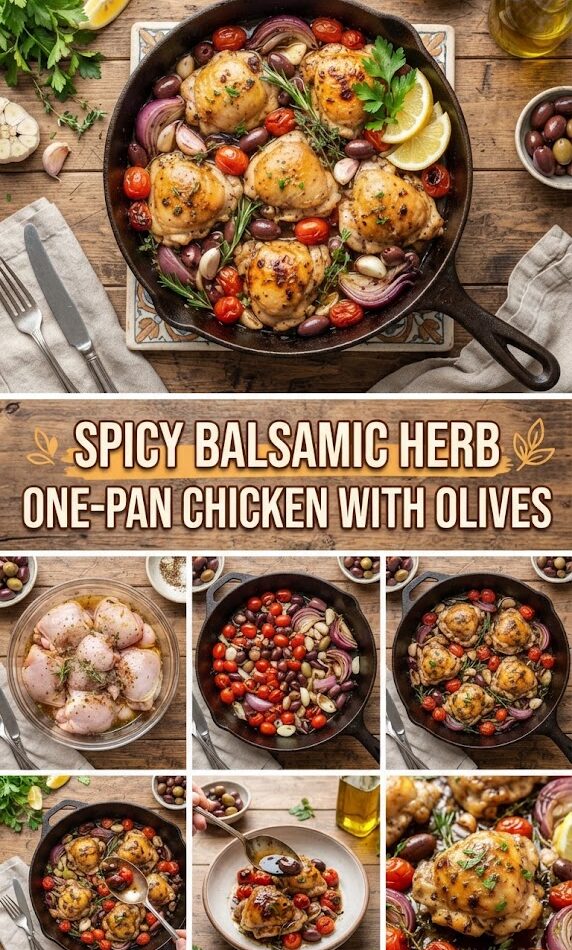
Spicy Balsamic Herb One-Pan Chicken With Olives
Spicy Balsamic Herb One-Pan Chicken With Olives is the kind of easy dinner recipe that delivers restaurant-style flavor without requiring a complicated cooking process. Juicy chicken, briny olives, garlic, fresh herbs, balsamic vinegar, and a touch of chili come together in one skillet to create a savory, tangy, slightly spicy meal that is perfect for busy weeknights.
This one-pan chicken recipe is especially appealing when you want a hearty homemade dinner but do not want a sink full of dishes afterward. The chicken is first seared until beautifully golden, then finished in a rich balsamic herb sauce with olives. The result is tender chicken coated in a glossy sauce with layers of sweet, tangy, garlicky, herbal, and spicy flavor.
Whether you are searching for easy chicken dinner recipes, one-pan meals, Mediterranean-inspired chicken recipes, healthy weeknight dinners, or chicken recipes with olives, this dish deserves a place in your regular dinner rotation.
Why You’ll Love This One-Pan Chicken Recipe
There are plenty of reasons this spicy balsamic chicken can become a family favorite.
1. Everything Cooks in One Pan
The biggest advantage is convenience. The chicken and sauce are prepared in the same skillet, which means less cleanup after dinner. A large oven-safe skillet or heavy-bottomed pan works beautifully.
2. Big Flavor With Simple Ingredients
You do not need a long list of specialty ingredients. Balsamic vinegar adds acidity and subtle sweetness, while garlic, oregano, rosemary, and red pepper flakes create a deeply savory flavor.
3. Juicy, Tender Chicken
Searing the chicken first helps develop a flavorful golden crust. Finishing it gently in the sauce allows the meat to absorb the surrounding flavors.
4. Perfect for Busy Weeknights
This recipe is simple enough for a weeknight but flavorful enough to serve when you have guests.
5. Easy to Customize
You can use chicken breasts or thighs, change the herbs, increase the heat, add vegetables, or serve the chicken with rice, pasta, potatoes, or crusty bread.
What Makes Balsamic and Olives Work So Well Together?
Balsamic vinegar and olives create a particularly delicious contrast.
Balsamic vinegar brings acidity and a mild sweetness that helps brighten the savory chicken. Olives provide saltiness and a briny flavor that balances the acidity. Garlic adds warmth, while herbs bring freshness and fragrance.
Red pepper flakes add a gentle heat that turns the dish into something more exciting without overpowering the other flavors.
The combination is especially good because every bite has several layers of flavor: tender chicken, tangy balsamic sauce, salty olives, aromatic herbs, and a little spicy kick.
Ingredients You’ll Need
For approximately 4 servings, gather the following ingredients:
- 4 boneless, skinless chicken breasts or chicken thighs
- 2 tablespoons olive oil
- 1 teaspoon kosher salt
- ½ teaspoon black pepper
- 1 teaspoon smoked paprika
- ½ teaspoon red pepper flakes, or more to taste
- 4 cloves garlic, minced
- 1 teaspoon dried oregano
- 1 teaspoon dried thyme
- ½ teaspoon dried rosemary
- ⅓ cup balsamic vinegar
- ½ cup low-sodium chicken broth
- ¾ cup pitted Kalamata or green olives
- 1 tablespoon honey or maple syrup
- 1 teaspoon Dijon mustard
- 1 small onion, thinly sliced
- 1 cup cherry tomatoes, optional
- 1 tablespoon fresh parsley, chopped
- 1 tablespoon fresh basil, chopped
- Lemon wedges for serving, optional
The ingredient list can be adjusted depending on your taste and what you already have in your kitchen.
Choosing the Best Chicken
Both chicken breasts and chicken thighs work well for this recipe.
Chicken Breasts
Boneless, skinless chicken breasts are lean and mild in flavor. If your chicken breasts are very thick, slice them horizontally into thinner cutlets or gently pound them to an even thickness. This helps them cook more evenly.
Chicken Thighs
Boneless, skinless chicken thighs are slightly richer and more forgiving during cooking. They are an excellent choice if you prefer especially tender chicken.
Bone-in chicken thighs can also be used, although they will require additional cooking time.
Choosing the Right Olives
Kalamata olives are an excellent choice because their rich, fruity, slightly salty flavor pairs beautifully with balsamic vinegar.
Green olives work equally well if you prefer a sharper, more pronounced briny taste.
You can also combine Kalamata and green olives for additional texture and flavor.
If the olives are extremely salty, give them a quick rinse and drain them before adding them to the skillet.
How to Make Spicy Balsamic Herb One-Pan Chicken With Olives
Step 1: Prepare the Chicken
Pat the chicken dry with paper towels. Removing excess moisture helps the chicken develop better browning when it hits the hot skillet.
Season both sides with salt, black pepper, smoked paprika, and red pepper flakes.
If using thick chicken breasts, pound them gently to an even thickness.
Step 2: Heat the Skillet
Place a large skillet over medium-high heat.
Add olive oil and allow it to heat until shimmering but not smoking.
A cast-iron skillet is particularly good for this recipe because it holds heat well and creates beautiful browning.
Step 3: Sear the Chicken
Place the seasoned chicken in the hot skillet.
Cook for approximately 3 to 5 minutes per side, depending on thickness, until the exterior develops a deep golden-brown color.
The chicken does not necessarily need to be completely cooked at this stage because it will finish cooking in the sauce.
Remove the chicken from the skillet and place it temporarily on a clean plate.
Step 4: Cook the Onion and Garlic
Reduce the heat to medium.
Add sliced onion to the same skillet. Cook for approximately 2 to 3 minutes until it begins to soften.
Add minced garlic, oregano, thyme, rosemary, and the remaining red pepper flakes.
Cook for about 30 seconds, stirring frequently.
Be careful not to burn the garlic because burnt garlic can make the entire sauce bitter.
Step 5: Build the Balsamic Sauce
Pour the balsamic vinegar into the skillet.
Use a wooden spoon or spatula to scrape the browned bits from the bottom of the pan.
Those browned pieces are packed with flavor and help make the sauce taste much richer.
Add chicken broth, honey or maple syrup, and Dijon mustard.
Stir everything together.
Step 6: Add the Olives
Add the olives and optional cherry tomatoes.
Allow the sauce to simmer for 2 to 3 minutes.
At this point, you should notice the balsamic vinegar becoming slightly thicker and more fragrant.
Step 7: Return the Chicken
Place the seared chicken back into the skillet.
Spoon some of the balsamic sauce over the chicken.
Reduce the heat to medium-low and cover the skillet loosely with a lid.
Let the chicken simmer gently until completely cooked.
For food safety, poultry should reach a minimum internal temperature of 165°F, measured with a food thermometer.
Step 8: Finish With Fresh Herbs
Turn off the heat.
Scatter fresh parsley and basil over the chicken.
A squeeze of fresh lemon juice can also brighten the sauce.
Let the chicken rest for a few minutes before serving.
How to Know When the Chicken Is Done
The most reliable way to determine whether chicken is safely cooked is to use a food thermometer rather than relying only on appearance.
The USDA recommends cooking poultry to 165°F (73.9°C).
Insert the thermometer into the thickest portion of the chicken without touching bone.
Chicken can sometimes remain slightly pink even after reaching a safe temperature, so color alone is not a dependable indicator of doneness.
Tips for Perfect One-Pan Chicken
Don’t Skip the Searing
The initial sear creates browned flavors that make the finished dish much more flavorful.
Don’t Overcrowd the Pan
If your skillet is too small, the chicken may steam instead of brown. Use a large skillet or cook the chicken in batches.
Control the Heat
Balsamic vinegar can become overly concentrated if cooked too aggressively. Keep the sauce at a gentle simmer once the chicken is returned to the skillet.
Taste Before Adding More Salt
Olives naturally contain plenty of salt. Taste the sauce before adding additional salt.
Use Fresh Herbs at the End
Dried herbs work well during cooking, but fresh parsley and basil added at the end provide a fresher flavor.
How Spicy Is This Chicken?
The recipe has a moderate level of heat from red pepper flakes.
For mild chicken, use only ¼ teaspoon.
For medium heat, use approximately ½ teaspoon.
For spicy chicken, increase it to 1 teaspoon or more.
You can also add a pinch of cayenne pepper for a stronger kick.
If you are cooking for children or people who do not enjoy spicy food, reduce the red pepper flakes and allow individual servings to be finished with chili flakes at the table.
What to Serve With Balsamic Chicken
This chicken is incredibly versatile.
Creamy Mashed Potatoes
The balsamic olive sauce tastes wonderful spooned over mashed potatoes.
White or Brown Rice
Rice absorbs the flavorful sauce and turns the chicken into a satisfying complete meal.
Garlic Bread
Crusty garlic bread is perfect for soaking up every last drop of the balsamic pan sauce.
Roasted Potatoes
Crispy roasted potatoes provide a wonderful contrast to the tender chicken.
Pasta
Serve the chicken over spaghetti, penne, or another favorite pasta for a comforting dinner.
Couscous
Couscous is quick to prepare and pairs especially well with Mediterranean-inspired flavors.
Green Salad
For a lighter meal, serve the chicken with a simple salad of lettuce, cucumber, tomatoes, and lemon vinaigrette.
Roasted Vegetables
Broccoli, zucchini, asparagus, bell peppers, and green beans are excellent side dishes.
How to Make This Recipe More Mediterranean
To give the dish an even stronger Mediterranean-inspired character, add:
- Kalamata olives
- Cherry tomatoes
- Fresh parsley
- Fresh basil
- Oregano
- Lemon zest
- Roasted red peppers
- Artichoke hearts
You can also crumble a little feta cheese over the finished chicken.
The salty feta works beautifully with the balsamic sauce and olives.
Can You Use Chicken Thighs?
Absolutely.
Chicken thighs are one of the best choices for this recipe because they stay moist and tender.
Use boneless, skinless thighs for faster cooking.
If using bone-in thighs, increase the cooking time and always verify that the thickest part of the chicken reaches 165°F.
Can You Make It With Chicken Breast?
Yes.
Chicken breast is a leaner option and works particularly well when sliced into thinner cutlets.
Avoid cooking very thick chicken breasts over high heat for too long because the outside can become dry before the center finishes cooking.
An instant-read thermometer makes it much easier to cook chicken breasts properly.
How to Make the Sauce Thicker
If you prefer a thicker, more concentrated sauce, remove the chicken once it is cooked and allow the sauce to simmer uncovered for several minutes.
You can also add a small amount of cornstarch slurry if desired.
Mix approximately 1 teaspoon cornstarch with 1 tablespoon cold water, then stir it into the simmering sauce.
Cook until slightly thickened.
Do not add dry cornstarch directly to the hot sauce because it can form lumps.
How to Make the Recipe Sweeter
If you enjoy sweet-and-savory chicken, increase the honey slightly.
Balsamic vinegar naturally has a sweet-tart flavor, so even a small amount of honey can noticeably change the balance.
You can also use maple syrup instead of honey.
How to Make It Extra Tangy
For extra acidity, add fresh lemon juice at the end.
You can also add a little lemon zest for a brighter citrus aroma.
Another option is to increase the balsamic vinegar slightly, but add it gradually so the sauce does not become too sharp.
How to Make It Dairy-Free
This recipe is naturally dairy-free as long as the ingredients you choose do not contain dairy.
For a creamy variation without traditional dairy, stir a small spoonful of unsweetened dairy-free cream or coconut cream into the finished sauce.
The coconut flavor will slightly change the character of the dish, so use only a small amount.
How to Add Vegetables
This one-pan chicken is easy to turn into a vegetable-packed meal.
Try adding:
- Bell peppers
- Zucchini
- Mushrooms
- Cherry tomatoes
- Spinach
- Artichoke hearts
- Broccoli
- Green beans
- Roasted red peppers
Firm vegetables should be added earlier, while delicate ingredients such as spinach should be added near the end.
Make It a Complete One-Pan Dinner
For a more substantial meal, you can add cooked baby potatoes to the skillet.
Another option is to serve the finished chicken directly over cooked rice.
If you want everything to cook in one pan, par-cooked potatoes work particularly well because they can finish cooking while absorbing the balsamic sauce.
Meal Prep Instructions
This recipe is suitable for meal preparation.
Cook the chicken according to the recipe and allow it to cool appropriately before storing.
Divide chicken and sauce into airtight containers.
Add rice, potatoes, couscous, or vegetables to create balanced meal-prep portions.
When ready to eat, reheat thoroughly.
According to USDA guidance, cooked chicken leftovers should be refrigerated promptly and generally used within 3 to 4 days.
How to Store Leftovers
Allow leftovers to cool and transfer them to shallow airtight containers.
Refrigerate promptly rather than leaving cooked chicken at room temperature for an extended period.
USDA recommends refrigerating perishable food within 2 hours, or within 1 hour when temperatures are above 90°F.
Store the chicken and sauce together so the meat stays flavorful and moist.
How to Reheat
The best way to reheat the chicken is gently in a skillet.
Add a small splash of chicken broth or water, cover the skillet, and warm over medium-low heat.
You can also use a microwave, heating in short intervals and stirring the sauce between intervals.
When reheating leftovers, USDA recommends bringing them to 165°F.
Can You Freeze This Chicken?
Yes.
Allow the cooked chicken and sauce to cool properly, then transfer them to a freezer-safe container.
For best texture, freeze the chicken with some of the sauce.
Thaw overnight in the refrigerator before reheating.
The olives may become slightly softer after freezing, but the dish will still be flavorful.
Recipe Variations
Creamy Balsamic Chicken
Add a splash of heavy cream toward the end of cooking for a richer sauce.
Balsamic Chicken With Feta
Finish with crumbled feta cheese and fresh parsley.
Mushroom Balsamic Chicken
Sauté sliced mushrooms after searing the chicken and before making the sauce.
Lemon Balsamic Chicken
Add lemon zest and fresh lemon juice for extra brightness.
Honey Balsamic Chicken
Increase the honey for a sweeter glaze.
Extra-Spicy Balsamic Chicken
Add red pepper flakes and a pinch of cayenne.
Tomato Balsamic Chicken
Add cherry tomatoes or crushed tomatoes for a more tomato-forward sauce.
Common Mistakes to Avoid
Using Too Much Balsamic Vinegar
Balsamic vinegar is powerful. Too much can overwhelm the chicken and make the sauce overly acidic.
Burning the Garlic
Garlic cooks quickly. Keep it moving in the pan and avoid cooking it over extremely high heat.
Adding Too Much Salt
Olives can be salty, so season conservatively until you taste the finished sauce.
Overcooking Chicken Breast
Chicken breasts are lean and can dry out if cooked far beyond the safe temperature.
Skipping the Rest
Allowing the chicken to rest briefly after cooking helps keep the meat juicy when sliced.
Frequently Asked Questions
What is spicy balsamic chicken?
Spicy balsamic chicken is chicken cooked with balsamic vinegar, herbs, garlic, and chili seasonings. This version also includes olives for a salty Mediterranean-inspired flavor.
Can I make this chicken without olives?
Yes. If you do not enjoy olives, simply leave them out. You can replace them with capers, roasted red peppers, or additional vegetables.
What olives are best for chicken?
Kalamata olives are an excellent choice, but green olives, Castelvetrano olives, or a combination can also work.
Is balsamic vinegar good with chicken?
Yes. Its sweet-tart acidity pairs especially well with savory chicken, garlic, herbs, and vegetables.
Can I use dried herbs?
Definitely. Dried oregano, thyme, and rosemary work well in the sauce. Fresh parsley and basil are excellent finishing herbs.
How do I make this chicken less spicy?
Reduce or remove the red pepper flakes.
Can I make this recipe ahead?
Yes. Cook the chicken and sauce, refrigerate promptly, and reheat gently when ready to serve.
What temperature should chicken reach?
All poultry should reach a minimum internal temperature of 165°F (73.9°C) measured with a food thermometer.
What is the best pan for this recipe?
A large cast-iron skillet, stainless-steel skillet, or other heavy-bottomed oven-safe pan works well.
Nutrition-Friendly Serving Ideas
If you are looking for a balanced dinner, pair one serving of chicken with a generous portion of vegetables and a moderate serving of rice, quinoa, potatoes, or another whole-food carbohydrate.
For a lighter dinner, serve the chicken over mixed greens with tomatoes and cucumber.
For a higher-energy meal, serve it with pasta, rice, or crusty bread.
Because nutritional values vary according to chicken cut, portion size, olive quantity, oil, and other ingredients, calculate nutrition using the exact brands and quantities you use.
Why This Is a Great Weeknight Dinner
Modern weeknight cooking is often about finding the balance between convenience and flavor.
A meal can be quick, but if it tastes bland, it is unlikely to become a favorite.
This recipe solves that problem by using a handful of strong ingredients that work together naturally.
The chicken provides a mild, satisfying base.
Balsamic vinegar adds brightness.
Olives add saltiness.
Garlic adds savory depth.
Herbs add aroma.
Red pepper flakes provide heat.
Honey balances the acidity.
The result is a dish that feels much more complicated than it actually is.
The Secret to Restaurant-Style Flavor
One of the most important techniques is building flavor in layers.
Start with properly seasoned chicken.
Sear it until browned.
Cook aromatics in the same pan.
Deglaze with balsamic vinegar.
Add broth and seasonings.
Return the chicken to finish cooking.
Finally, add fresh herbs and lemon.
Each stage contributes something different, and the browned bits left in the pan become part of the sauce.
This simple technique can dramatically improve many one-pan chicken recipes.
Perfect for Family Dinners
This chicken recipe can easily be adapted for different tastes.
For adults, serve the chicken with extra chili flakes.
For children, reduce the spice and serve the olives separately if necessary.
You can also allow everyone to customize their plate with lemon, herbs, feta, or extra sauce.
Because the recipe pairs well with rice, potatoes, pasta, and vegetables, it is easy to build a complete family meal around it.
Dinner Party Serving Idea
For a casual dinner party, place the skillet directly on the table after finishing the chicken with fresh herbs.
Serve alongside:
- Warm crusty bread
- Lemon wedges
- Simple green salad
- Roasted vegetables
- Herbed rice
- Sparkling water with lemon
The colorful olives, herbs, tomatoes, and glossy balsamic sauce make the dish look impressive without requiring complicated plating.
Final Thoughts
Spicy Balsamic Herb One-Pan Chicken With Olives is a flavorful, practical dinner that proves easy recipes do not have to be boring.
The combination of juicy chicken, tangy balsamic vinegar, savory herbs, garlic, spicy red pepper flakes, and briny olives creates a delicious balance of flavors. Because everything comes together in one skillet, cleanup is easy and the cooking process remains simple.
Serve it with rice for a satisfying family dinner, pair it with roasted vegetables for a lighter meal, or add crusty bread to soak up the sauce.
Once you try this recipe, you can easily customize it with your favorite vegetables, herbs, olives, and spice level.
For the best results, focus on three things: brown the chicken well, build the sauce in the same pan, and use a thermometer to ensure the chicken reaches 165°F.
That combination gives you a dependable, flavorful chicken dinner that is perfect for busy weeknights, casual entertaining, and meal prep.