The Invisible Economy: How to Make Money Without Selling a Single Product
The traditional image of “making money” usually involves a transaction: you have a product, someone else has cash, and you convince them to swap. Whether it’s a lemonade stand, a dropshipping empire, or a high-pressure sales floor, the “sell” has always been the engine of income.
But the digital landscape has shifted. We have entered the era of the Invisible Economy, a space where your data, your attention, your unused resources, and your simple presence are worth cold, hard cash. You don’t need to be a charismatic salesperson. You don’t need to manage inventory. You don’t even need to talk to another human being.
This guide explores the most lucrative, legitimate ways to generate income by leveraging things you already have—without ever asking someone to “buy now.”
1. Monetizing Your Digital Footprint: The Data Dividends
In the 21st century, data is more valuable than oil. Large corporations are desperate to understand consumer behavior, and they are willing to pay you for a peek into your digital life.
Sharing Your Internet Bandwidth
If you have an unlimited high-speed internet connection, you are likely wasting a massive amount of “idle” bandwidth. Companies like Honeygain, Pawns.app, and PacketStream allow you to share your unused internet with businesses for web intelligence, price comparisons, and ad verification.
- How it works: You install a small application on your PC or smartphone. It runs in the background, using a tiny fraction of your connection.
- The Payoff: While it won’t make you a millionaire, it’s a truly passive income stream that can cover your monthly Netflix or Spotify subscription with zero effort.
Passive Market Research Panels
Companies like Nielsen Computer & Mobile Panel and SavvyConnect pay you simply to keep their app installed on your devices. They track high-level trends—like which apps are most popular or what time of day people browse the news—to help brands make decisions.
2. The Content Creator Model: Revenue Without Retail
The most successful influencers and content creators aren’t salespeople; they are entertainers and educators. When you watch a YouTube video or read a popular blog, you aren’t “buying” anything, yet the creator is getting paid.
Ad Revenue (YouTube and Blogs)
When you create content that attracts attention, platforms will pay you to place ads alongside that content.
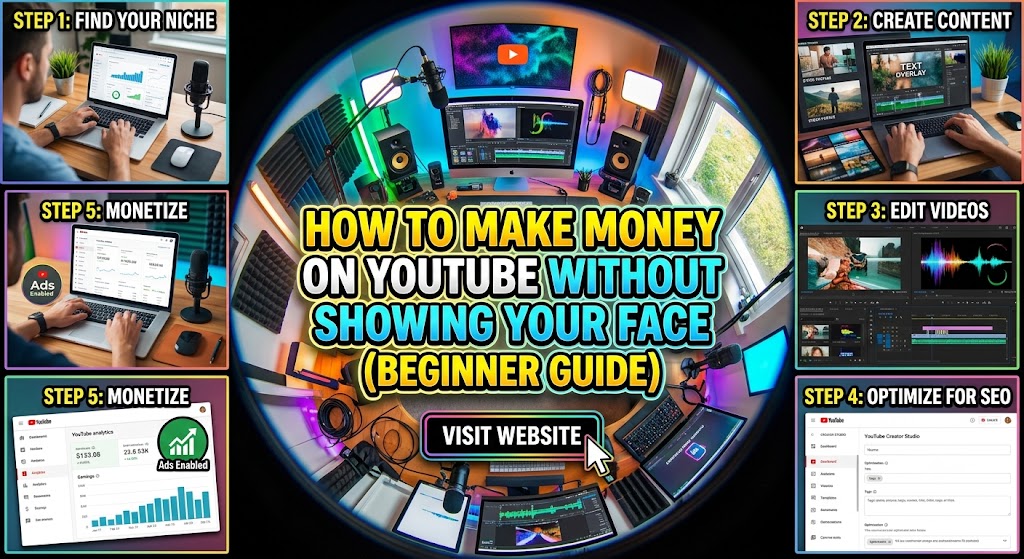
- YouTube Partner Program: Once you hit the threshold of subscribers and watch hours, YouTube pays you a share of the ad revenue generated by your videos. You aren’t selling a product; you are selling the audience’s attention to advertisers.
- Display Advertising (Ezoic, Mediavine, AdThrive): If you enjoy writing, start a niche blog. Once you get traffic, these ad networks will place high-paying ads on your site. You earn money every time someone views your page.
Title: Make Money Online Even If You Hate Sales (2026 Guide)
1. Why You Don’t Need to Sell to Make Money
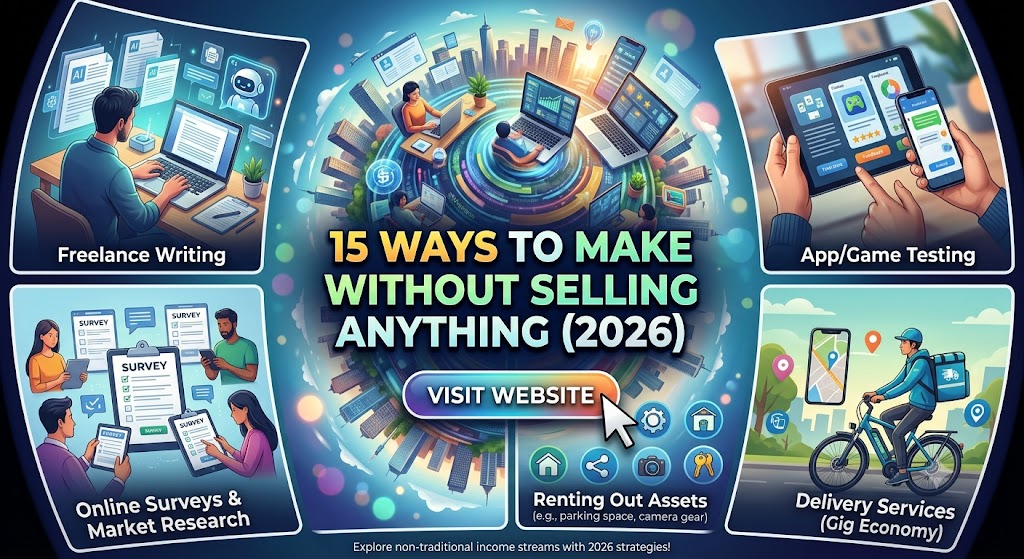
Many people believe earning online requires selling products or convincing customers. In reality, there are dozens of business models where you get paid for your skills, content, or participation—without ever making a sales pitch.
2. Start Freelancing
Offer services like:
- Writing
- Graphic design
- Video editing
- Programming
- Virtual assistance
Clients come looking for your skills, so there’s little to no selling involved.
3. Get Paid to Test Websites & Apps
Companies pay users to:
- Test new websites
- Find bugs
- Give feedback
- Complete usability tests
This is one of the easiest ways for beginners to earn online.
4. Create a YouTube Channel
You don’t have to sell anything.
Earn from:
- Ad revenue
- Channel memberships
- Sponsorships
- Affiliate links (optional)
Focus on educational or entertaining content.
5. Start a Blog
Write helpful articles about topics you enjoy.
Monetize with:
- Display ads
- Sponsored posts
- Affiliate marketing
- Newsletter sponsorships
6. Print-on-Demand
Design T-shirts, mugs, and posters.
A fulfillment company prints and ships the products, so you don’t manage inventory or handle customer orders yourself.
7. Sell Digital Downloads
Create once and earn repeatedly:
- Templates
- E-books
- Checklists
- Notion dashboards
- Printable planners
These products can generate passive income over time.
8. Earn Through Affiliate Marketing
Recommend products or services you genuinely use.
You earn a commission when someone buys through your referral link—without creating your own product.
9. Participate in Online Surveys & Research
Join trusted platforms that pay for:
- Surveys
- Focus groups
- Product testing
- Market research
It’s not a full-time income but can provide extra cash.
10. Teach or Tutor Online
Share your knowledge in:
- Languages
- Math
- Coding
- Music
- Business skills
You get paid for your expertise rather than selling products.
11. License Your Photos or Videos
Upload your content to stock media platforms.
Earn royalties whenever someone downloads your work.
12. Become a Remote Customer Support Agent
Many companies hire remote representatives.
You’ll help customers solve problems without needing to sell anything.
13. Monetize Social Media Content
Grow an audience on:
- TikTok
- X
Income sources include creator funds, sponsorships, and ad-sharing programs.
14. Use AI Skills to Earn
Offer services such as:
- AI-generated content
- Prompt writing
- Image generation
- Automation setup
- AI-powered research
Demand for AI-related skills continues to grow.
15. Build Passive Income Over Time
Combine several income streams:
- YouTube
- Blogging
- Digital products
- Affiliate marketing
- Stock media
The goal is to create multiple sources of recurring income.
Key Takeaways
- You don’t need to sell products to earn online.
- Focus on building valuable skills and creating helpful content.
- Diversify your income streams instead of relying on a single source.
- Stay consistent—small efforts can grow into meaningful passive income over time.
This structure works well for a 10–15 minute YouTube video, with each section serving as a natural chapter that keeps viewers engaged.
3. Micro-Tasks and the “Human Intelligence” Market
Artificial Intelligence is smart, but it still needs humans to teach it. This has created a massive market for “micro-tasking”—performing small, repetitive tasks that computers can’t quite handle yet.
AI Training and Data Labeling
Platforms like Appen, TELUS International (formerly Lionbridge), and Amazon Mechanical Turk (mTurk) pay users to perform tasks such as:
- Identifying objects in photos (to help self-driving cars).
- Transcribing short audio clips.
- Rating the relevance of search engine results.
- Verifying that an AI-generated paragraph makes logical sense.
User Testing
Brands need to know if their websites are confusing. Sites like UserTesting, Intellizoom, and TryMyUI pay you to navigate a website while thinking out loud into a microphone.
- The Hook: You aren’t selling the website. You are the critic. You get paid for your honest frustration or praise. A typical 20-minute test can pay $10, which equates to a $30/hour rate.
4. Renting Your Assets: The “Lazy” Sharing Economy
Selling an item means it’s gone forever. Renting an item means it keeps coming back with more money. This is the ultimate “no-selling” strategy because you are providing access, not a product.
Rent Your Unused Space
- Storage (Neighbor.com): If you have an empty garage, basement, or even a shed, you can rent it out to people who need to store their boxes or boats. It’s like Airbnb, but for “stuff.” There’s no guest to entertain and no bed to make.
- Parking (JustPark, Spothero): Do you live near a stadium, a downtown area, or a train station? Your driveway is a goldmine. Renting out your parking spot daily or monthly is one of the lowest-effort ways to generate hundreds of dollars.
Rent Your Assets
- Your Car (Turo, Getaround): If your car sits in the driveway while you work from home, let it work for you. Peer-to-peer car sharing allows you to rent your vehicle to vetted drivers.
- Your Tools (Fat Llama): Do you own a high-end camera, a power drill, or a lawnmower? These items spend 95% of their lives sitting in a drawer. Rent them out to people in your neighborhood.
5. Professional Feedback and Focus Groups
Your opinion is a commodity. Large corporations spend billions of dollars on research and development, and they cannot afford to launch a product that people hate.
High-Paying Focus Groups
Sites like Respondent.io and User Interviews connect professionals with researchers. Unlike standard $1 surveys, these are deep-dive focus groups or one-on-one interviews.
- The Payoff: If you have a specific skill set (e.g., you are a software developer, a nurse, or a small business owner), you can find studies that pay $100 to $500 for a single hour of your time.
- Why it works: You aren’t selling them anything; they are paying for your expertise to ensure they don’t fail at selling.
Medical and Sleep Studies
If you are healthy (or sometimes, if you have a specific condition), universities and clinics will pay you to participate in clinical trials or sleep studies.
- Sleep Studies: You essentially get paid to go to a clinic, get hooked up to monitors, and take a nap. It is arguably the only way to “make money while you sleep” in a literal sense.
6. Making Your Money Work (Passive Financial Income)
If you have even a small amount of savings, you can move away from “selling your time” and start “collecting rent” on your capital.
High-Yield Savings and CDs
While traditional banks offer 0.01% interest, digital-only banks often offer significantly higher rates. By moving your “emergency fund” to a high-yield account, you are earning passive interest every month.
Dividend Investing
Instead of trying to “buy low and sell high” (which is just another form of sales), focus on Dividend Growth Investing.
- The Concept: You buy shares in companies that pay a portion of their profits back to shareholders every quarter (like Coca-Cola, Johnson & Johnson, or Apple).
- The Goal: Eventually, your dividend payments can cover your living expenses. You never sell the stock; you just collect the checks.
Crypto Staking
For those with a higher risk tolerance, the cryptocurrency world offers “staking.” This is similar to earning interest in a bank account but often with much higher yields. By “staking” your coins to help validate transactions on a blockchain, you earn new coins as a reward.
7. The “Get Paid to Exist” Apps (Incentivized Living)
There is a growing category of apps that reward you for things you are already doing—walking, playing games, or even just unlocking your phone.
Get Paid to Walk
Apps like Sweatcoin and CashWalk track your steps and reward you with “coins” that can be traded for gift cards or products. You were going to walk to the kitchen or the office anyway—you might as well get a micro-payment for it.
Play-to-Earn (Casual Gaming)
Apps like Mistplay and InboxDollars pay you to try out new mobile games. Game developers need a high “player count” to look successful in the App Store, so they effectively “hire” you to play their games for a few minutes a day.
8. Energy and Ecology: The Green Income Stream
In many parts of the world, the “selling” happens automatically through your infrastructure.
Solar Net Metering
If you have solar panels on your roof, you often produce more electricity than you use during the day. In many regions, the utility company is legally required to “buy” that excess energy from you.
- The Result: Your electric meter literally spins backward, and at the end of the month, the utility company sends you a check.
9. How to Build Your “No-Sell” Ecosystem
The secret to making significant money without selling is stacking. One data-sharing app won’t pay your mortgage, but a combination of several streams can create a substantial “Passive Income Floor.”
The Step-by-Step Blueprint:
- Level 1 (The Low Hanging Fruit): Install 2-3 data-sharing apps (Honeygain, SavvyConnect) and a walk-to-earn app. This takes 10 minutes of setup and requires zero maintenance.
- Level 2 (The Weekly Routine): Sign up for UserTesting and Respondent. Check for available studies once a day while you drink your morning coffee. This can add $200-$500 a month.
- Level 3 (The Asset Flip): List your driveway or spare room on a rental platform. This turns a stagnant asset into a monthly cash-flow machine.
- Level 4 (The Long Game): Start a content platform (YouTube, Blog, or Newsletter). Don’t focus on selling products; focus on providing so much value that people want to give you their attention. Let the advertisers handle the “selling” part.
The Psychological Shift: From Merchant to Participant
The reason most people struggle to make money is that they find “selling” uncomfortable. They don’t want to be the “Hey Hun” person on Facebook or the cold-caller on the phone.
By shifting your focus to the Invisible Economy, you remove the friction. You are no longer a merchant; you are a participant. You are contributing to the flow of data, the training of AI, the efficiency of the sharing economy, and the vibrancy of the content world.
In this new economy, you don’t need a storefront. You just need to be connected, be observant, and be willing to let your assets and your actions work on your behalf. The money is there—hidden in the background noise of the digital age. You just need to turn on the receiver.